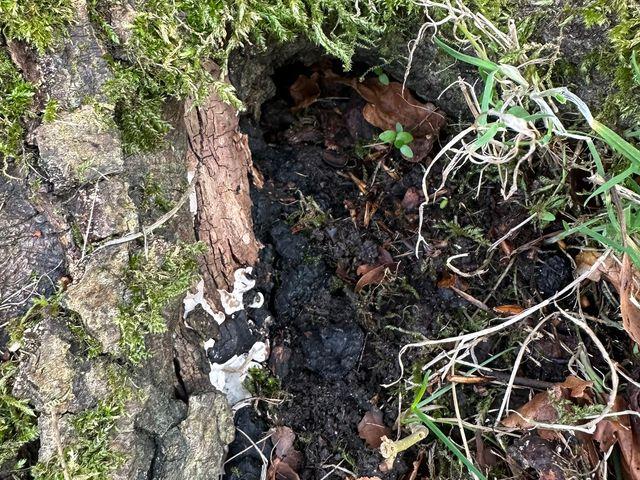
Fungi on Trees
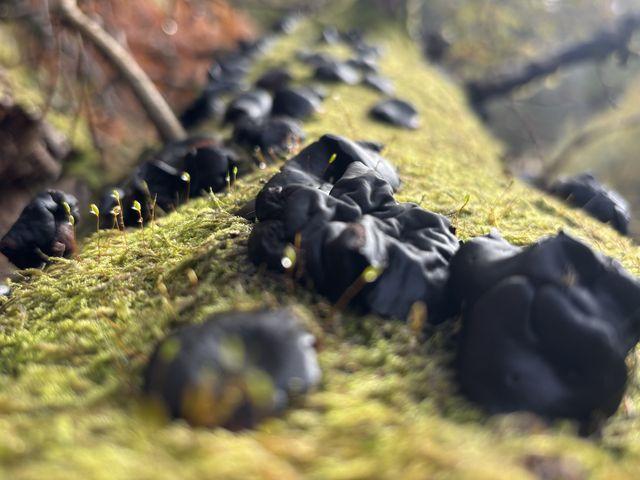
Are all Fungi bad?
When we talk about fungi on trees, it’s easy to think of them only as signs of disease or decay. But fungi are also a vital part of healthy woodland ecosystems.
Some species form mutual partnerships with trees, where both the fungus and the tree benefit. Other fungi can be an early warning sign of structural problems or internal decay that might not be immediately visible.
Many fungi also play an important role in breaking down dead wood, recycling nutrients back into the soil to support new growth.
So, while certain fungi indicate issues like decay or instability, many others are essential allies in keeping our woodlands healthy and thriving.
Spotting Them...
They can be anywhere on the tree, this includes the stem, the branches, roots and base of the tree.
Finding where the fungi is located on the tree is usually helpful to help identify as some species will most likely only grow
in one place.
The best time to see new bracket fungi is early autumn, in September and October.
This is when many species begin to fruit and release their spores, but they need the right conditions to do so.
moisture from autumn rain
mild temperatures ideally 10-20 degress
a window before the first frosts arrive
Summer is often too hot and dry, while frost halts fruiting. That’s why early autumn provides the perfect balance for these fascinating fungi to emerge.
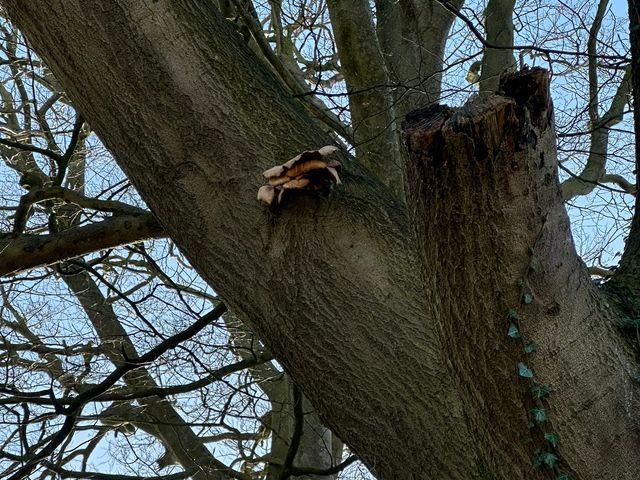
Bad Fungus
These fungi show signs of rot in trees and can be the cause of the decay or damage to the tree.
Ø Ganoderma
· Often found on beech, oak, and other broadleaves.
· Forms hard, brown bracket fungi at the base or on the trunk.
· Causes white rot, weakening roots and buttress wood.
Ø Giant Polypore
· Frequently on mature beech and occasionally other broadleaves.
· Produces large, fan-shaped brackets at the base of the tree in summer/autumn.
· Causes extensive root decay, significant risk of windthrow.
Ø Honey Fungus
· Affects a wide range of trees.
· Honey-coloured toadstools appear at the base of trees in autumn.
· Black “bootlace” pieces of fungi under the bark or in the soil; causes root and collar rot.
Ø Brittle Cinder
· Found on beech, lime, sycamore, and others.
· Initially greyish crusts that turn black and brittle on the lower stem.
· Leads to brittle fracture at the base.
Ø Chicken of the Woods
· Bright sulphur-yellow brackets, often on oak, willow, yew.
· Causes brown rot; can significantly weaken heartwood.
Good fungus
Some fungi are good for trees, and these are called Mycorrhizal fungi, they are good for the trees because they work in partner with them to help collect nutrients and water for them and the tree gives sugar back in return.
Ø Fly Agaric
· The iconic red-capped mushroom with white spots.
· Forms partnership with birch, pine, and spruce.
· Supports nutrient exchange, especially in heathland and woodland edges.
Ø Penny Bun
· Partners with beech, oak, and pine.
· Helps trees access phosphorus and other soil nutrients.
· Also, an important part of the forest food web.
Ø Amethyst Deceiver & Deceiver
· Associates with birch, oak, and pine.
· Improves nitrogen uptake for young trees in woodland and heathland.
Ø Cortinarius species. (a lot of different types of this one)
· A very large group of mycorrhizal fungi, common in conifer and broadleaf woods.
· Many species form beneficial root partnerships with pine and birch.
Some Fungi We've Found !
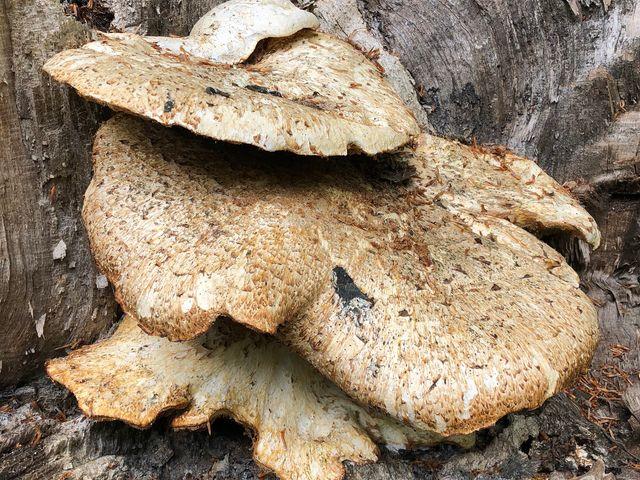
Drayd's Saddle
These are typically found on a dead or terminally ill broadleaf. The type of decay they create is
called white-rot which starts in sapwood making its way to the heartwood of the
tree. They can be found anywhere on the stem or branches. Appearing after a
wound of fracture to the tree and stay localised to the initial damage.
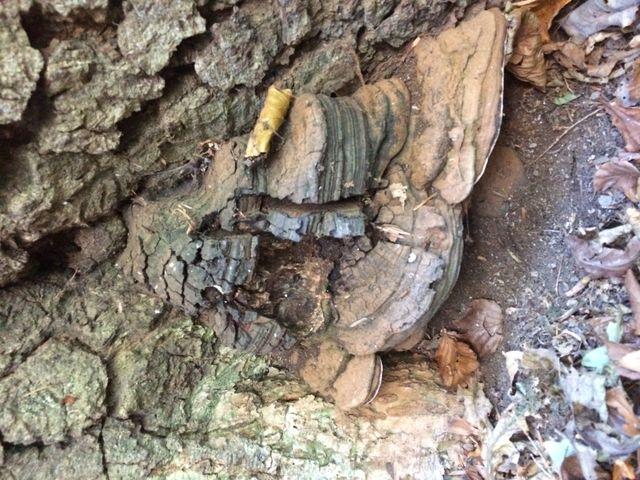
Ganoderma
Primarily found on beech and sometimes on oak. They can be located anywhere on trees; some
brackets can last for over 50 years. These fungi work through a process called
delignification which is means it removes the lignin from the tree, this is the
glue in a tree holding together the cellulose and other fibres giving the tree
strength. So, by removing the lignin it makes the tree weak and less able to
move nutrients and water thought itself.
Birch Polypore
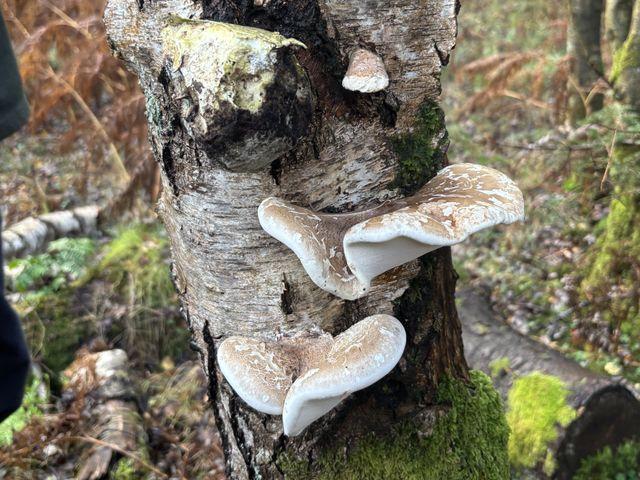
Mainlyfound on the main stem of a birch. The brackets can grow up to 300mm across.
brown-rot is caused by these fungi and can lead to snapping of the stem on
smaller trees.
Cinder Fungus
Cinder fungi is a very commonly found fungi. they create soft-rot in the early stages which effects
the cellulose rich layer, once enough damage has occurred to the cellulose
layer it turns the wood brittle. They are found on the lower stem and principal
roots.